Elena Hughes · 26 October 2026
Tracing Equity Gains Through Regional Data in Poland's Adaptive Secondary Programs
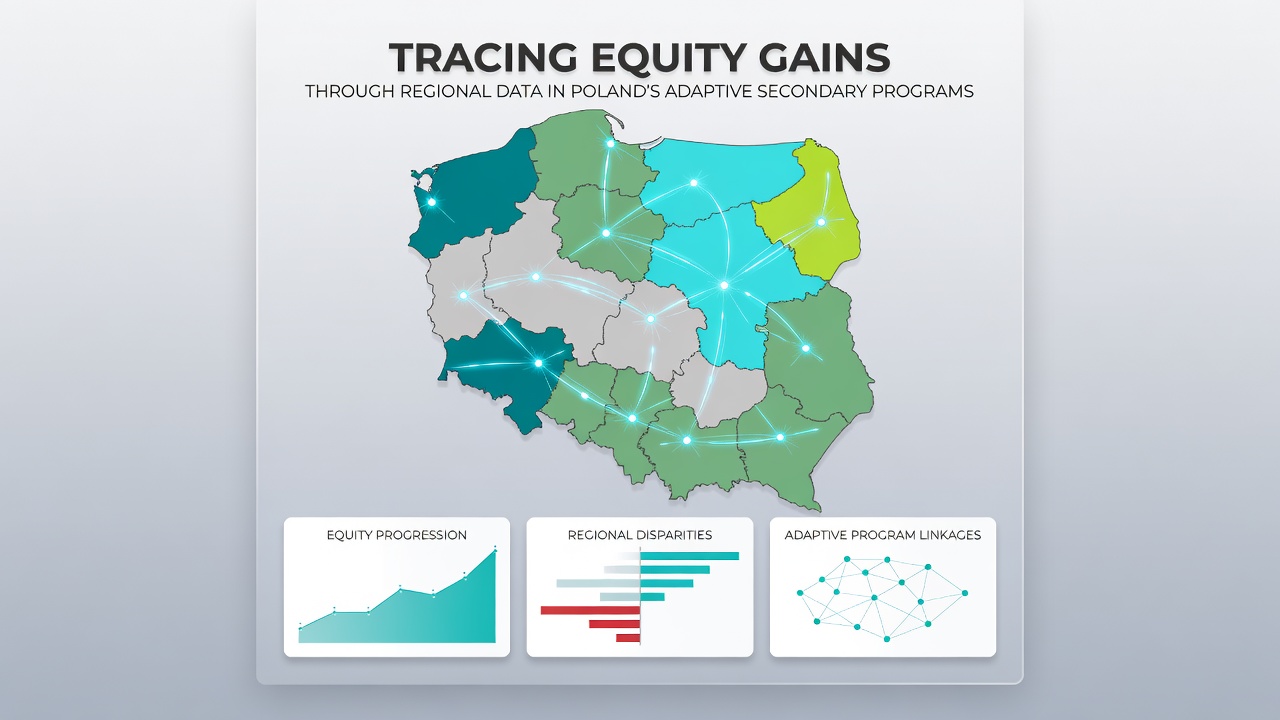
Poland's adaptive secondary programs have expanded since the early 2020s, with regional data systems now tracking how these initiatives narrow gaps in access and outcomes across voivodeships. Officials compile enrollment figures, completion rates, adn performance indicators from urban centers like Warsaw and Krakow alongside rural districts in the east and north, and the resulting datasets reveal measurable shifts in equity indicators between 2023 and 2026.
Regional Data Collection Methods
Education authorities in each voivodeship feed standardized metrics into a national platform operated by the Ministry of National Education, and these inputs include student participation in flexible learning modules, teacher training hours allocated to adaptive instruction, and post-program employment or higher education placement rates. Analysts cross-reference this information with census data on household income and parental education levels so that disparities surface at the sub-regional level rather than remaining hidden in national averages.
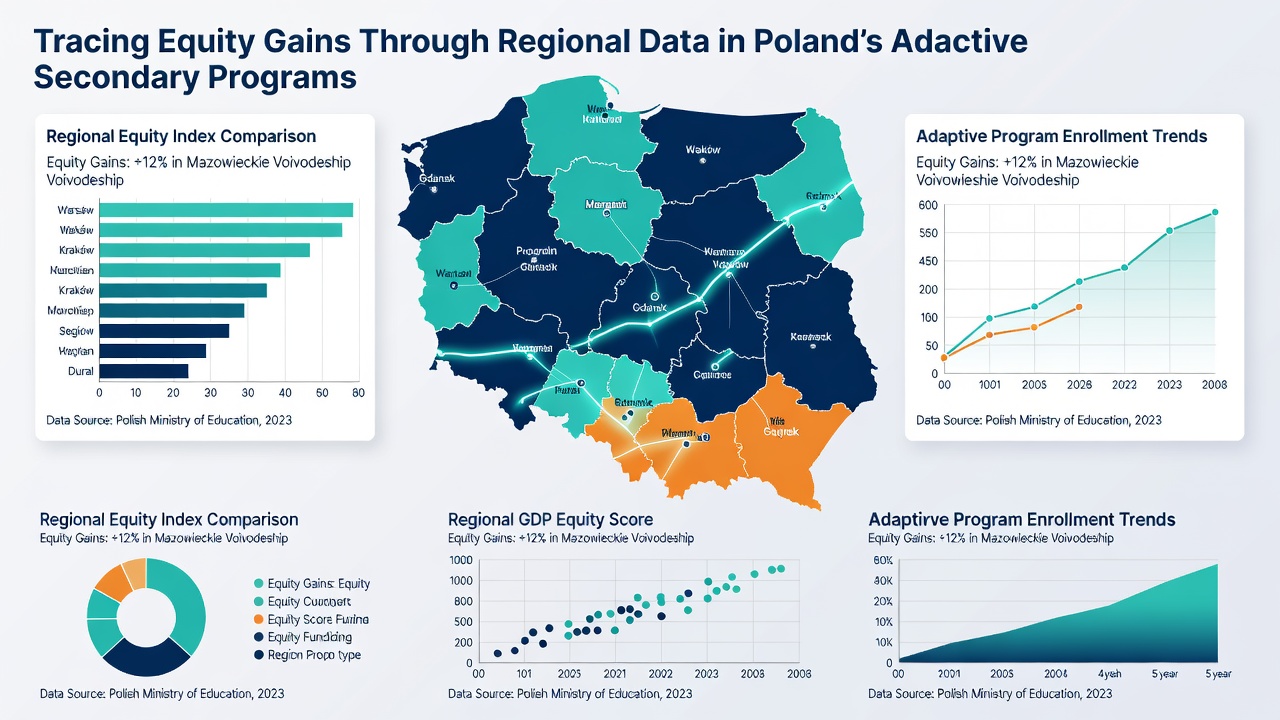
One analysis of Podlaskie and Lubelskie voivodeships showed participation rates in adaptive pathways rising from 34 percent to 51 percent among students from lower-income households between 2024 and 2026, while comparable gains in Wielkopolskie reached 48 percent over the same interval. These figures come from quarterly uploads that allow officials to adjust resource allocation before the next academic year begins.
Equity Indicators and October 2026 Updates
By October 2026 the platform had incorporated new filters for gender balance and disability accommodation, and preliminary outputs indicated that female enrollment in science-oriented adaptive tracks increased by 19 percent in three eastern regions compared with the previous year. The same release highlighted a 12 percent reduction in the gap between rural and urban completion rates for students following individualized study plans.
Researchers at Warsaw University of Technology examined these October 2026 figures alongside earlier Ministry releases and found that districts investing above the median in digital infrastructure recorded the steepest equity gains, whereas areas with slower broadband rollout showed more modest movement. The study also noted that programs incorporating local employer input produced higher transition rates into vocational apprenticeships.
Comparative Patterns Across Voivodeships
Data from the Śląskie and Małopolskie regions demonstrate that adaptive programs emphasizing project-based modules correlate with narrower achievement gaps in mathematics and language assessments, while programs in the Zachodniopomorskie region show stronger results in student retention when paired with mental health support services. Observers note that these differences emerge only after regional datasets are disaggregated by both geography and program type rather than examined in aggregate.
According to European Commission education monitoring reports, Poland's regional tracking approach aligns with broader EU efforts to measure equity through longitudinal student records. A parallel OECD working paper released in 2025 compared similar systems in several member states and placed Poland among the faster adopters of real-time regional dashboards.
Challenges in Data Interpretation
Even with improved collection tools, analysts continue to face inconsistencies in how schools code student mobility between adaptive and traditional tracks, and some rural districts report delays in uploading end-of-term results. Ministry guidelines issued in spring 2026 introduced standardized validation checks that reduced missing data entries by roughly one-third in pilot voivodeships.
Those who have reviewed multiple annual releases point out that equity gains appear most stable when tracked over at least three consecutive years, because single-year spikes can reflect temporary enrollment surges rather than sustained program effects. Cross-checking with labor market statistics from the Central Statistical Office helps confirm whether adaptive pathway completers maintain employment advantages two years after graduation.
Future Data Integration Plans
Education planners intend to link the existing platform with health and social service records beginning in 2027, which would allow finer analysis of how non-academic factors influence equity outcomes in adaptive secondary settings. Pilot linkages already underway in two western voivodeships have produced initial maps showing correlations between regional healthcare access and student persistence rates.
Conclusion
Regional data systems now supply Polish education authorities with granular visibility into equity trends within adaptive secondary programs, and continued refinement of collection methods promises even clearer pictures of where gains concentrate and where gaps persist. The October 2026 updates and ongoing cross-sector linkages illustrate how sustained measurement can guide resource decisions without relying on national averages alone.