Wendy Koch · 28 September 2026
Tracking Participation Shifts in Poland's Secondary Environmental Programs After Recent Curriculum Adjustments
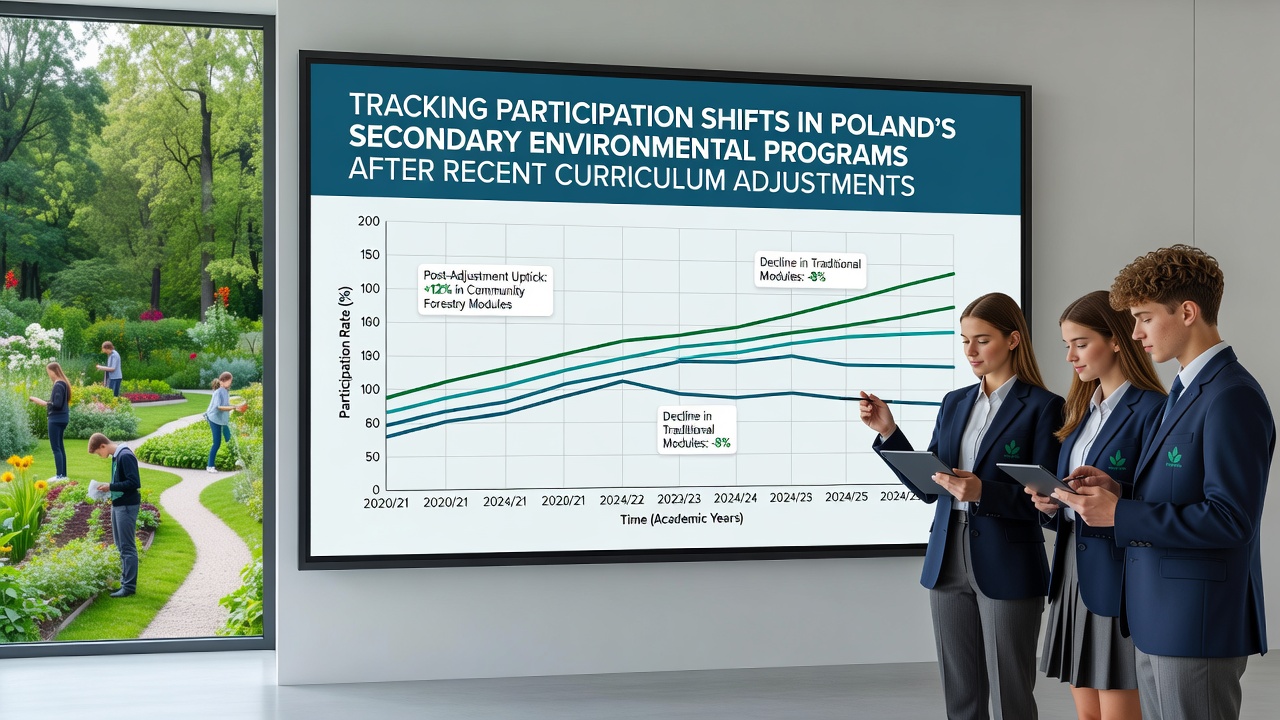
Poland introduced curriculum adjustments for secondary schools in 2024 that expanded required modules on climate systems, biodiversity monitoring, and sustainable resource management. These changes took effect across public and private institutions, and observers note measurable differences in student enrollment patterns by early 2025. Data from teh Ministry of National Education show that environmental program participation rose in urban centers such as Warsaw and Kraków while rural districts recorded slower uptake during the same period.
Researchers at the University of Warsaw compiled enrollment statistics from 320 secondary schools and found that elective environmental clubs increased from 18 percent of total extracurricular offerings in 2023 to 27 percent by the close of the 2025 academic year. The adjustments required every student to complete at least one project-based unit on local ecosystem assessment, which shifted many schools toward field-based learning rather than textbook instruction alone.
Pre-Adjustment Baseline and Initial Implementation
Before the 2024 revisions, environmental education existed mainly as optional after-school groups with limited integration into core science classes. Figures from the Central Statistical Office of Poland indicate that roughly 41,000 students participated in recognized environmental programs during the 2022-2023 school year. Following the curriculum update, schools restructured timetables to include two additional hours per month dedicated to environmental fieldwork, and participation climbed to 58,000 students by June 2025.
Implementation varied by region. Schools in the Silesian and Lesser Poland voivodeships adopted the new modules faster because regional authorities supplied teacher training grants, whereas northern coastal districts encountered delays due to staffing shortages. Teachers completed certification courses offered through the National Centre for Supporting Vocational and Continuing Education, which prepared 2,150 educators in the first wave of training sessions.
Participation Trends Through Mid-2025
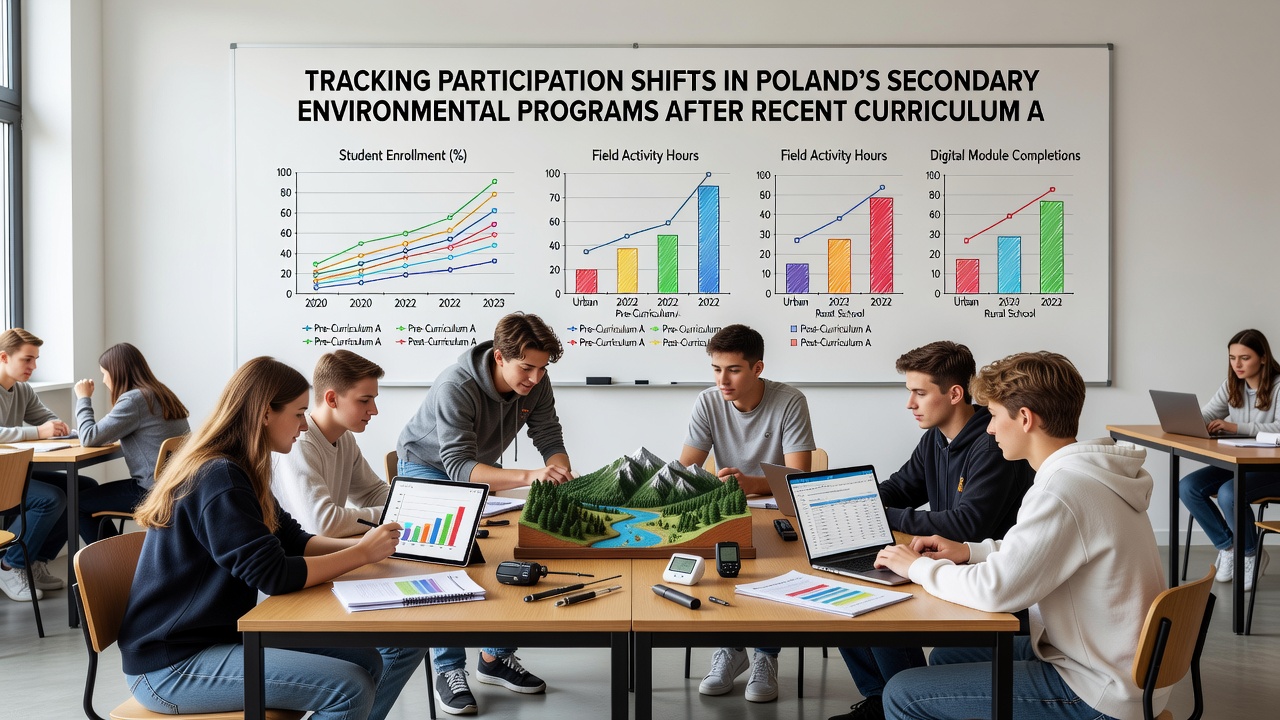
Quarterly reports compiled by regional education boards reveal distinct patterns. Urban schools reported a 34 percent increase in female student enrollment in environmental tracks, while male participation grew by 19 percent over the same interval. The gender gap narrowed most noticeably in programs that combined data analysis with outdoor sampling, according to records maintained by the Polish Association of Environmental Educators.
By September 2026, the Ministry plans to release the second annual national survey that will track whether participation rates stabilize or continue climbing. Preliminary internal documents suggest that schools using digital mapping tools alongside traditional fieldwork maintain higher retention rates across both semesters. One study conducted at the Jagiellonian University tracked 1,200 students and determined that those completing the required project unit were 1.8 times more likely to select environmental electives in the following term.
Regional Variations and Supporting Factors
Participation growth proved strongest in districts that partnered with local environmental agencies. In the Podlaskie region, collaboration with the Białowieża National Park allowed 47 schools to run joint monitoring projects, resulting in a 62 percent rise in program enrollment within one year. Conversely, schools without such partnerships showed average growth of only 11 percent.
Equipment access also influenced outcomes. A European Commission education report on member-state curriculum reforms notes that Polish secondary institutions received targeted funding for sensor kits and water-testing supplies in 2025, which reduced financial barriers for lower-income districts. OECD education statistics further indicate that countries integrating practical environmental modules at the secondary level observe similar enrollment lifts when material support accompanies policy changes.
Challenges Encountered During Rollout
Despite overall gains, several obstacles emerged. Some teachers reported insufficient time to cover both core biology content and the new environmental units within existing lesson blocks. Rural schools faced transportation costs for field trips that urban institutions avoided, leading to uneven implementation. The Ministry responded by allocating supplementary transport subsidies in the 2026 budget cycle, which administrators expect to mitigate these disparities.
Data collection methods also evolved. Schools began using standardized digital forms to log participation hours and project outcomes, improving comparability across voivodeships. This system replaced earlier paper-based reporting and reduced administrative errors by approximately 40 percent in pilot institutions.
Conclusion
Poland's 2024 curriculum adjustments produced measurable shifts in secondary environmental program participation through the 2025 and 2026 academic periods. Enrollment totals increased nationally, with pronounced differences between urban and rural settings and between schools that secured external partnerships versus those that did not. Continued monitoring scheduled for release in September 2026 will clarify whether these trends persist or plateau as institutions refine delivery methods and resource allocation. The available figures demonstrate that policy changes combined with training and material support correlate with higher student involvement in environmental education tracks.